Simplify LinkedIn Outbound With HubSpot
Hublead is a Chrome extension for adding prospects, logging conversations, and enriching LinkedIn contact data. No duplicates — just pure prospecting.


"Great tool! Easy to install and to get started. Support was great! Saves so much time, can't live without it."


Loved by 8,000+ Users













What HubSpot userssay about Hublead
Discover how sales professionals use Hublead to cut manual work, stay focused on LinkedIn, and turn more conversations into booked demos.
Best HubSpot‑LinkedIn Integration
best hubspot linkedin integration I used, easy to integrate with hubspot


Game Changer
Game changer 🔥

One‑Click Lead Capture
Does it's job very well. Adding everyone I meet / see in LinkedIn that's a great Lead prospect into Hubspot with a single click. Highly recommend it for this purpose!

Prevents Typos and Saves Time
Helps saves time -and- prevent typos!

Great Customer Service
Great customer service!

Life-Saving Time Saver
Finally! This app is a life saver. Ok.. time saver. I was really missing having a tool to import leads from LinkedIn to HubSpot CRM. Now it's a matter of one click. And all the conversations are saved too. Love this.

Incredible Support for Startups
“Helpful tool for our startup and incredible service.”

Must-Have for Sales Teams
“Hublead is a must-have tool for any sales professional. The ability to import contacts from LinkedIn to HubSpot in a single click has made my job a breeze. I can’t imagine my workday without it.”

Game-Changing for Founders
“Hublead is a game-changer. Importing LinkedIn messages to HubSpot in one click and automatic synchronization of new messages is brilliant. If you’re a founder, you need Hublead.”

Efficient Lead Management
“HubLead is a fantastic tool for lead management. It saves us a lot of time and works great with HubSpot. The integration is seamless, making it easy to track and organize leads efficiently. Highly recommend.”

Seamless HubSpot Integration
Hublead is amazing.... I started using the free version a week or two ago and loved it so much that I started paying for their professional package. I love how simple it is. The integration with Hubspot is huge and saves me so much time when it comes to manual data entry. The ability to add contacts quickly and sync messages from LinkedIn is awesome. Linking contacts that I already have in my CRM is super easy too. You should definitely try it out if you used LinkedIn a lot and want to save a... Show more

Time-Saving Automation
“How many apps out there truly encourage you to do outreach research on the daily? Hublead removes the chore of adding details manually and I use the reclaimed time for approach strategy.”

Lightning-Fast Support
Had an issue with administration of licenses within my team. Bastien solved it within seconds – awesome support!

You're on LinkedIn to get demos.Not updatingHubSpot
No need to learn a new tool, Hublead is integrated right into your LinkedIn navigation, helping you stay organized and maximize your prospecting efforts.
Import LinkedIn contacts in 1 click
You now have a “Add to CRM” button on every LinkedIn contacts
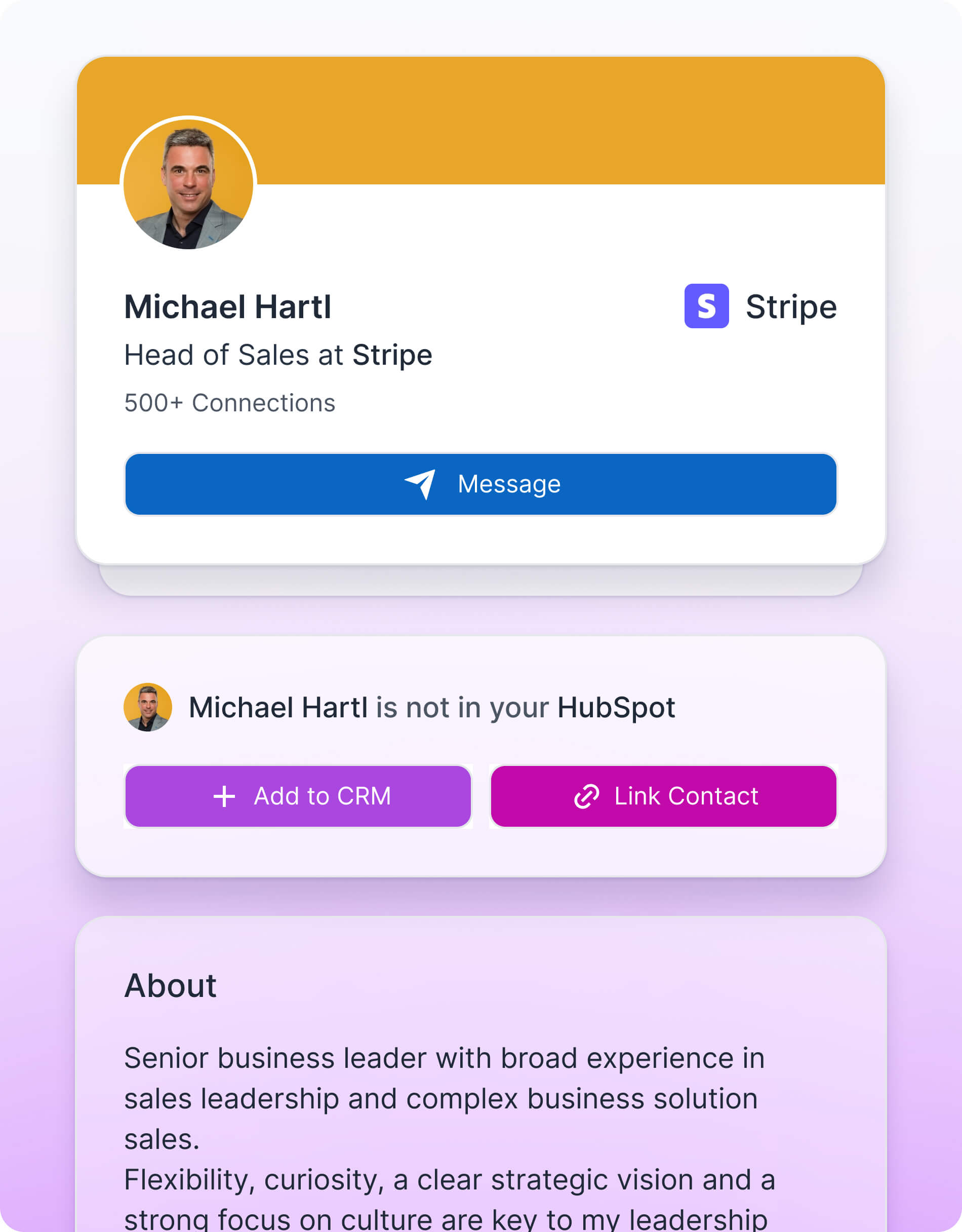


Enrich contacts & companies
Leverage LinkedIn data in your HubSpot: Lists, workflows and reports.
Real Growth. Real Stories. Real Impact.
See how marketing teams are using AI tools to scale their marketing efforts.

See why companies like to work with Marketing Hub.
Hours saved
Deals from LinkedIn
ROI from LinkedIn
Built for HubSpot. Perfected for You.
We’ve used HubSpot for years — that’s why we built the only integration you can truly rely on. No hacks. No fakes. Just seamless sync.
Stop Wasting Time. Start Selling.
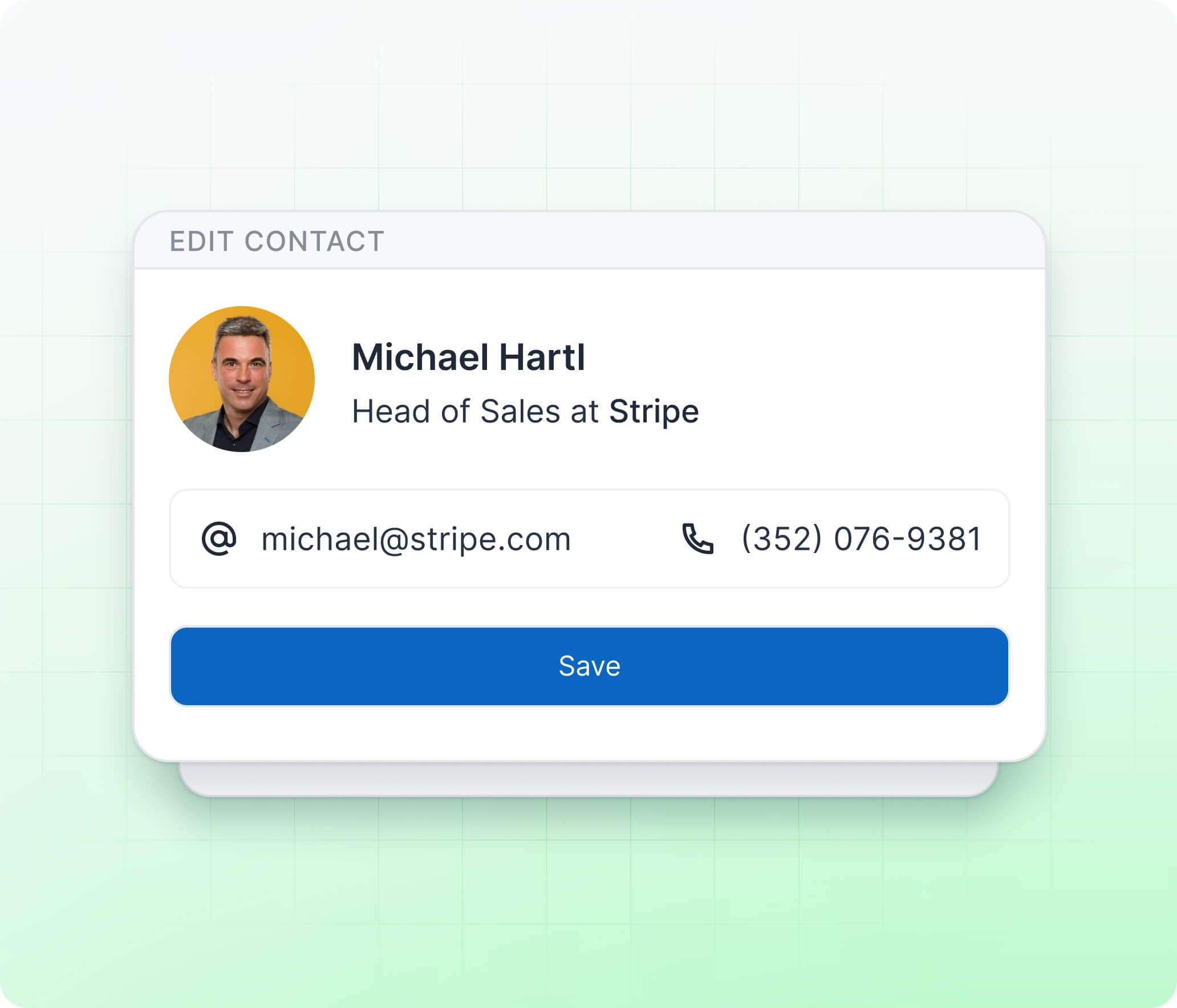
Checking a contact on LinkedIn? You wonder: Is this person in HubSpot? Did we reach out already? Is their info up to date?
Instead of switching tabs and wasting time, Hublead keeps everything in LinkedIn. Update your contact in just one click.
Get the right contact details.
Enrichment is messy — juggling multiple tools just to find the right email or phone number.
With Hublead, we take care of it. Each time you enrich a contact, we automatically pull from multiple data providers to give you the most accurate details.
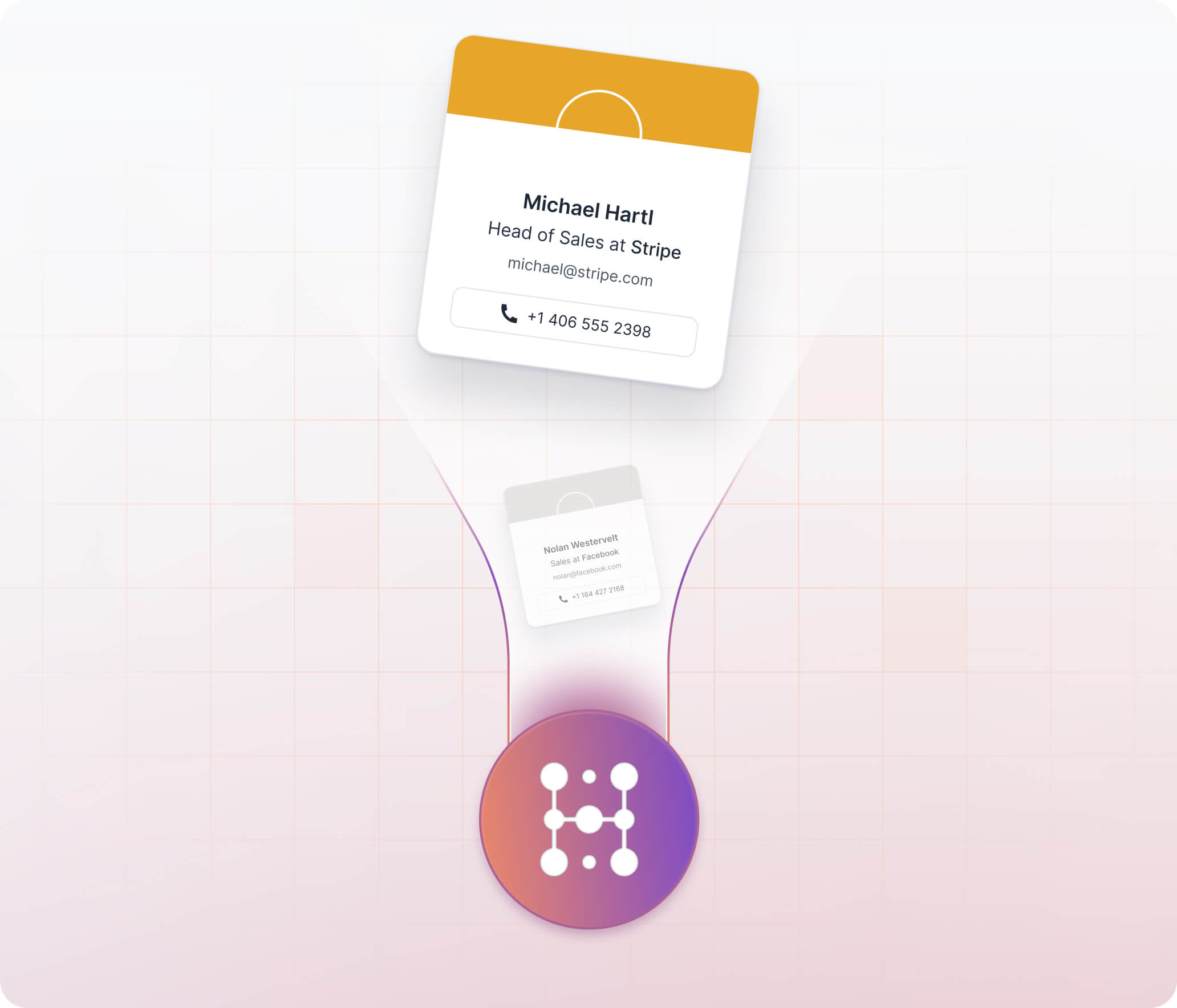
LinkedIn follow-up is chaos. Hublead makes it simple.
No more guessing who you messaged last week or last month. That’s why you use a CRM — to stay organized.
Hublead automatically imports all LinkedIn activities (messages and invitations) into HubSpot, so you can track every lead and turn conversations into revenue — without losing time.


And what our users are saying
Hublead is a Chrome extension for adding prospects, logging conversations, and enriching LinkedIn contact data. No duplicates — just pure prospecting.

Excellent, time-saving tool for adding leads to your CRM. I use HubSpot and it's been a lifesaver for my team and I.

Game-changer!! I'm using Hublead for several weeks now and my life is better!

Great product. Made HubSpot so much more usable and streamlined huge portions of the sales and prospecting process. Incredible support as well - whenever I had a problem, it was dealt with within minutes. Highly recommend.

Has been a massive time saver so far. Thank you for developing a great product!

Hublead has ben great for making the connection between HubSpot and LinkedIn as easy and simple as possible. The email contact information is VERY good and the phone contact information is a little more hit or miss but still pretty good. Overall, very pleased with Hublead and would recommend giving it a try.

Awesome tool. Very easy to set up and incorporate into existing apps infrastructure. Love it! Sync contacts data in CRM and LinkedIn + messages sync.

Working very well. It saved a lot of time in copy&paste contacts and messages into our CRM. Unfortunately, it does not allow to configure which contact field is to be used to sync with Hubspot Sales. We already had our linkedin profile field in use...with data. Thus, the task to-do is to export all data, merge these two fields, and import them back. EDITED after Julien's response: Solved the mapping missunderstanding! Up to 5*.

At the moment very good product! You just press add contact in sales navigator and it saves you all the important information of the contact and its company in hubspot.
LatestHubSpotLinkedIn Blog Posts
Explore tutorials and use cases for sales and marketing pros — from HubSpot workflows and automations to LinkedIn Ads and lead generation strategies.

Frequently Asked Questions
No need to learn a new tool, Hublead is integrated right into your LinkedIn navigation, helping you stay organized and maximize your prospecting efforts.
AI search is fundamentally rewriting how users discover content. Chat-based search engines like Perplexity and ChatGPT now answer simple questions before users click any links, intercepting up to 25% of traditional search traffic. Even in traditional Google search, AI overviews occupy an increasing amount of the first page, resulting in fewer clickthroughs.This creates a new reality for marketers: fewer website visits overall, but those who do visit have significantly higher purchase intent.
AI search is fundamentally rewriting how users discover content. Chat-based search engines like Perplexity and ChatGPT now answer simple questions before users click any links, intercepting up to 25% of traditional search traffic. Even in traditional Google search, AI overviews occupy an increasing amount of the first page, resulting in fewer clickthroughs.This creates a new reality for marketers: fewer website visits overall, but those who do visit have significantly higher purchase intent.
AI search is fundamentally rewriting how users discover content. Chat-based search engines like Perplexity and ChatGPT now answer simple questions before users click any links, intercepting up to 25% of traditional search traffic. Even in traditional Google search, AI overviews occupy an increasing amount of the first page, resulting in fewer clickthroughs.This creates a new reality for marketers: fewer website visits overall, but those who do visit have significantly higher purchase intent.
AI search is fundamentally rewriting how users discover content. Chat-based search engines like Perplexity and ChatGPT now answer simple questions before users click any links, intercepting up to 25% of traditional search traffic. Even in traditional Google search, AI overviews occupy an increasing amount of the first page, resulting in fewer clickthroughs.This creates a new reality for marketers: fewer website visits overall, but those who do visit have significantly higher purchase intent.
AI search is fundamentally rewriting how users discover content. Chat-based search engines like Perplexity and ChatGPT now answer simple questions before users click any links, intercepting up to 25% of traditional search traffic. Even in traditional Google search, AI overviews occupy an increasing amount of the first page, resulting in fewer clickthroughs.This creates a new reality for marketers: fewer website visits overall, but those who do visit have significantly higher purchase intent.
AI search is fundamentally rewriting how users discover content. Chat-based search engines like Perplexity and ChatGPT now answer simple questions before users click any links, intercepting up to 25% of traditional search traffic. Even in traditional Google search, AI overviews occupy an increasing amount of the first page, resulting in fewer clickthroughs.This creates a new reality for marketers: fewer website visits overall, but those who do visit have significantly higher purchase intent.
AI search is fundamentally rewriting how users discover content. Chat-based search engines like Perplexity and ChatGPT now answer simple questions before users click any links, intercepting up to 25% of traditional search traffic. Even in traditional Google search, AI overviews occupy an increasing amount of the first page, resulting in fewer clickthroughs.This creates a new reality for marketers: fewer website visits overall, but those who do visit have significantly higher purchase intent.
AI search is fundamentally rewriting how users discover content. Chat-based search engines like Perplexity and ChatGPT now answer simple questions before users click any links, intercepting up to 25% of traditional search traffic. Even in traditional Google search, AI overviews occupy an increasing amount of the first page, resulting in fewer clickthroughs.This creates a new reality for marketers: fewer website visits overall, but those who do visit have significantly higher purchase intent.
AI search is fundamentally rewriting how users discover content. Chat-based search engines like Perplexity and ChatGPT now answer simple questions before users click any links, intercepting up to 25% of traditional search traffic. Even in traditional Google search, AI overviews occupy an increasing amount of the first page, resulting in fewer clickthroughs.This creates a new reality for marketers: fewer website visits overall, but those who do visit have significantly higher purchase intent.